The numbers land like a sledgehammer. Between January 1, 2025 and May 31, 2026, Malaysian authorities removed 457,562 pieces of online gambling-related content and blocked 1,778 gambling websites. That figure represents 98% of the 467,772 content removal requests MCMC processed during the period, a compliance rate that would be impressive if it were not for one uncomfortable fact: 65,280 pieces of scam and illegal gambling content remain online despite requests to take them down.
The enforcement machine is working. But it is not working fast enough for everyone.
What MCMC Actually Does
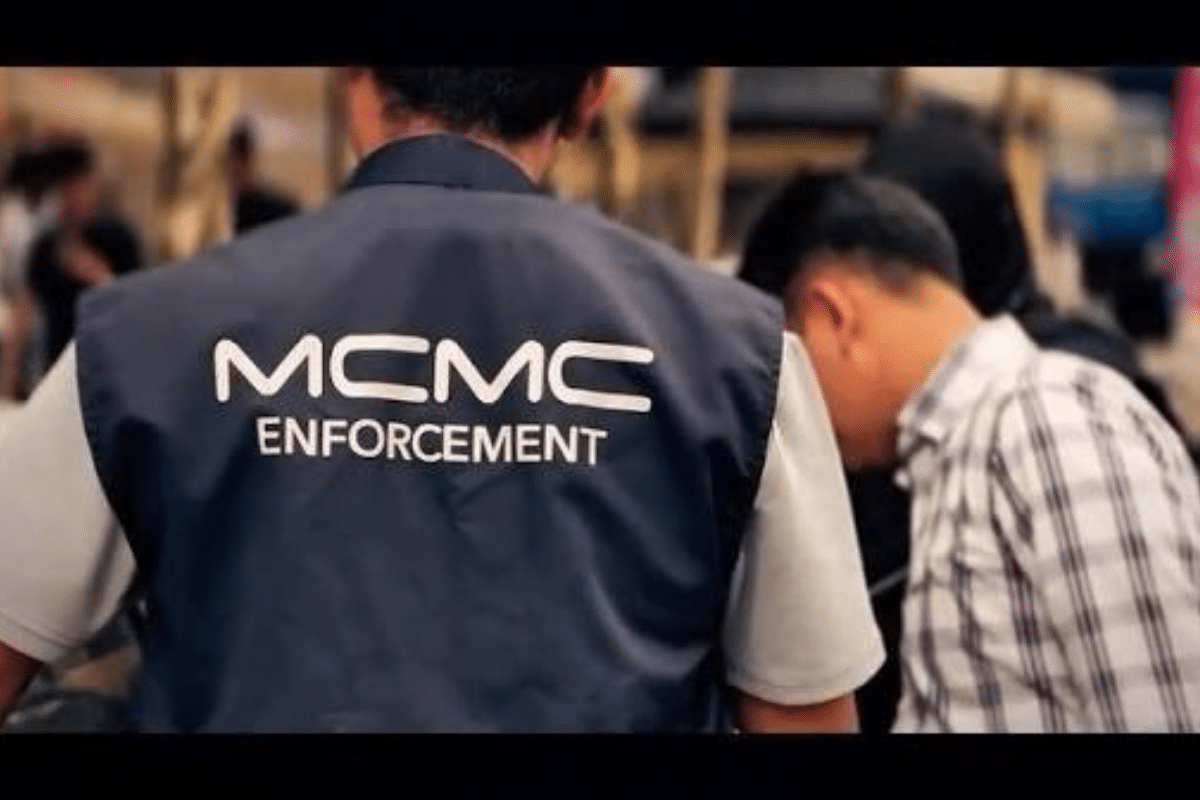
The Malaysian Communications and Multimedia Commission does not prosecute gamblers. That is PDRM’s job. MCMC’s role is narrower but no less critical: it blocks access to illegal gambling websites, removes gambling content from social media and messaging platforms, and supports police investigations with digital forensic analysis and technical intelligence.
The legal basis for this work comes from two statutes. The Communications and Multimedia Act 1998 provides the framework for content regulation and website blocking. The Online Safety Act 2025, passed in December 2025, strengthened MCMC’s powers by introducing automatic takedown requirements for high-risk scam and online gambling content. Under the new law, social media platforms must prepare their systems to automatically remove identified gambling content rather than waiting for user reports or regulatory requests. Communications Minister Fahmi Fadzil said platforms had been given time to align their internal mechanisms, but the directive was unambiguous: compliance was not optional.
The World Cup Effect
If there is a single event that illustrates the scale of Malaysia’s gambling enforcement challenge, it is the FIFA World Cup 2026. Major sporting events are prime season for illegal betting syndicates, and the 2026 tournament was no exception.
The Royal Malaysia Police launched Op Soga XI, a nationwide operation targeting illegal sports betting and online gambling linked to the tournament. The results were substantial. Police conducted 422 raids and arrested 554 suspects, including 341 Malaysians and 213 foreign nationals. Authorities seized RM167,062 in cash, with total illegal wagers worth RM3.249 million detected. Investigators identified 263 online betting platforms, applications, and social media channels used for football betting and gambling promotions — all referred to MCMC for blocking and content removal.
Bukit Aman Criminal Investigation Department director Comm Datuk M. Kumar warned that all participants — punters, agents, and ring operators — face charges under the Common Gaming Houses Act 1953 and the Anti-Money Laundering Act 2001. Police coordinated with MCMC and Bank Negara Malaysia to trace illicit gambling websites and transaction channels.
In a separate World Cup operation, police conducted 293 raids and arrested 331 suspects, including 234 Malaysians and 97 foreigners, with betting transactions valued at over RM2.63 million.
Facebook Is the Biggest Problem
The data on which platforms host the most gambling content is stark. Communications Minister Fahmi Fadzil revealed that 78% of online gambling content requested for removal was on Facebook. YouTube accounted for 18%, and TikTok for 4%.
For scam content, the distribution was different: Facebook topped the list at 53%, followed by TikTok at 39% and Threads at 5%.
“If we were to say which platform has committed the most ‘sins’ against Malaysians, Facebook is the biggest culprit for online gambling,” Fahmi said after signing a memorandum of understanding between the Immigration Department and MCMC.
Between January 1 and August 17, 2026, MCMC made 470,593 requests to social media platforms to remove criminal content. Platforms complied with 436,661 takedowns, a 93% compliance rate. Of the total requests, 91% involved online gambling content and scams.
The 65,280 pieces of content that remain online are not a rounding error. They are potentially harmful material still accessible to Malaysian users, despite regulatory requests to remove them.
The Compliance Gap
The 93% compliance rate sounds high. Fahmi does not see it that way.
“Although the compliance rate is relatively high, tens of thousands of potentially harmful pieces of content remain accessible to users,” he said at the M360 ASEAN 2026 conference in Kuala Lumpur.
His frustration is directed at platforms that respond only after MCMC makes a formal request or receives a public complaint. “In many instances, action is only taken after reports are made by MCMC or complaints are received from the public,” he said. “This delay gives space for harmful content to spread and increases the risk to society”.
The government’s response has been to shift the burden onto platforms. Under the Online Safety Act 2025, social media operators are expected to detect and remove high-risk content proactively, not reactively. The law gives regulators the authority to compel automatic takedowns of identified scam and gambling content.
The Broader Enforcement Picture
MCMC’s work against gambling content is part of a wider government strategy that includes the National Scam Response Centre and the Safe Internet Campaign, which has reached 10,303 schools and higher education institutions nationwide.
Since January 1, 2022, MCMC has submitted 275,787 requests for removal of scam-related content, including fake accounts and impersonation. Service providers removed 262,293 posts, a 95% compliance rate.
Online fraud losses in Malaysia reached RM958 million in the first half of 2026, compared to RM2.9 billion for the whole of 2025. The intersection between gambling content and scam operations is significant. Many illegal gambling platforms double as data-harvesting operations or fronts for financial fraud.
What Comes Next
The trajectory is clear. Malaysia is moving toward a more automated, platform-driven enforcement model. The days of waiting for user reports or regulatory complaints are ending. Under the Online Safety Act 2025, social media platforms are legally required to build systems that identify and remove gambling content automatically.
For MCMC, the challenge is not authority. It is scale. With over 457,000 pieces of content removed and 1,778 websites blocked in just 17 months, the enforcement apparatus is functioning. The remaining question is whether platforms will step up before regulators force their hand.
FAQ
What is MCMC’s role in combating illegal gambling?
MCMC blocks access to illegal gambling websites, removes gambling content from social media platforms, and supports police investigations with digital forensic analysis. Gambling enforcement itself falls under PDRM’s jurisdiction under the Common Gaming Houses Act 1953.
How many gambling websites has MCMC blocked?
MCMC blocked 1,778 gambling websites between January 2025 and May 2026. Since 2022, a total of 6,982 gambling websites have been blocked.
Which social media platform hosts the most gambling content?
Facebook accounts for 78% of online gambling content flagged for removal by MCMC, followed by YouTube at 18% and TikTok at 4%. For scam content, Facebook leads at 53%, followed by TikTok at 39%.
What is the Online Safety Act 2025?
The Online Safety Act 2025 is a Malaysian law that strengthens content regulation by requiring social media platforms to automatically remove high-risk scam and online gambling content. It gives MCMC stronger powers to compel compliance.
How many arrests were made during the World Cup 2026 crackdown?
Police conducted 422 raids and arrested 554 suspects during Op Soga XI, including 341 Malaysians and 213 foreign nationals. Total illegal wagers worth RM3.249 million were detected.
Sources
- Malaysian Communications and Multimedia Commission / VietnamPlus — Online gambling content removal and website blocking data, July 2026.
- The Vibes — “Fahmi: 65,280 scam, illegal gambling posts still online despite MCMC takedown requests,” September 10, 2026.
- New Straits Times — “Most content flagged for removal is on Facebook,” August 19, 2026.
- ECNS / China News — “Malaysia’s crackdown on illegal gambling: over 500 arrested during FIFA World Cup 2026,” July 7, 2026.
- Royal Malaysia Police (PDRM) — Op Soga XI enforcement data, June 2026.
- Ministry of Communications — Online gambling enforcement statistics, July 2026.
- Free Malaysia Today — “Social media platforms given time to automate scam and gambling content removal,” August 5, 2026.