Malaysia taxes gambling heavily. A casino pays 35% of its gross gaming income to the federal government. A 4D operator pays 8% gaming tax on every ringgit wagered, plus another 8% in pool betting duty on net sales, before it records a single ringgit of revenue. Corporate tax at 24% sits on top. Sales and service tax applies to gaming services.
The result is one of the highest effective tax burdens on any industry in the country — and a revenue stream that the Ministry of Finance treats as a reliable, if politically fraught, source of non-oil income. The problem is not that the government undertaxes gambling. The problem is that the government does not tax most of it at all.
The Headline Number: RM80 Million a Week
The most current figure available from the Ministry of Finance puts federal gaming tax collection at roughly RM80 million a week [citation:6]. Annualised, that is approximately RM4.16 billion a year in gaming duty alone.
That figure covers the direct gaming taxes and duties imposed on licensed operators: casino duty, gaming machine duty, gaming tax on number forecast operators, and pool betting duty. It does not include corporate income tax, sales and service tax, licence fees, or state-level assessment rates.
An earlier estimate from The Edge, based on 2015 data, put the industry’s annual gaming-related tax contribution at RM2.5 billion to RM2.7 billion, with an additional RM800 million to RM950 million in corporate taxes [citation:7]. The gap between the 2015 estimate and the current RM80 million weekly figure reflects both tax rate increases since 2019 and a broader definition of what counts as gaming duty.

Where the Money Comes From
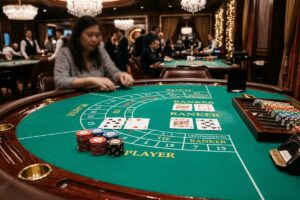
Malaysia’s taxed gambling market shows remarkable concentration. The government licenses three number forecast operators — Sports Toto, Magnum, and Da Ma Cai — and one casino, Resorts World Genting. No other entity pays gaming tax in Malaysia.
The Casino: Genting Malaysia
Resorts World Genting operates under a casino duty rate of 35% of gross gaming income, raised from 25% with effect from 1 January 2019 — the first increase in over two decades. The government simultaneously raised the annual casino licence fee to RM150 million from RM120 million, and increased gaming machine duty to 30% of gross collections from 20%.
Based on five years of casino revenue and an assumption that Malaysian operations account for roughly 70% of the group’s total gaming business, analysts conservatively estimate Genting Malaysia’s casino tax contribution to the Malaysian government between 2021 and 2025 at over RM15 billion. Affin Hwang Investment Bank estimated Genting Malaysia’s own gaming tax bill at more than RM1 billion a year.
That does not include corporate income tax, sales and service tax, hotel tax, entertainment duty, or state government fees. In 2018 alone, Genting paid RM350 million in assessment rates to the Bentong municipal council.
The Number Forecast Operators: Sports Toto, Magnum, Da Ma Cai
The NFO tax structure is layered. Every bet is subject to an 8% gaming tax on gross sales. A further 8% pool betting duty is applied to net sales after the gaming tax is deducted. Corporate income tax at 24% applies to profits. Sales and service tax applies to gaming services.
On a RM2 lottery ticket, the government takes approximately 30.7 sen before the operator records any revenue [citation:8]. The operator has no discretion over this deduction. It is netted off before the revenue line appears in the financial statements.
Between 2021 and 2025, Sports Toto and Magnum together contributed an estimated over RM7 billion in direct and indirect taxes to the Malaysian government. That figure includes gaming tax, pool betting duty, corporate tax, and other indirect taxes.
Affin Hwang put the number forecast industry’s annual contribution at close to RM3 billion in a 2022 note.
The Tax Leak: RM5 Billion a Year
The licensed market is taxed heavily. The illegal market is not taxed at all. And the illegal market is larger.
Analysts estimate Malaysia’s illegal gambling market at approximately RM18 billion a year. If the government regulated and taxed that activity at comparable rates, it could contribute up to RM5 billion annually in government revenue. Politicians, analysts, and enforcement officials across the political spectrum consistently cite that figure.
The gap is structural, not incidental. Malaysia built a tax apparatus for land-based gambling — casinos, 4D outlets, turf clubs — and then watched as the market migrated online, where none of those taxes apply. The licensed sector files audited accounts and pays quarterly. The unlicensed sector files nothing and pays nothing.
The consequence is that Malaysia taxes a shrinking share of a growing market. The RM80 million a week collected from licensed operators is real money, and it is not marginal to the federal budget. But it is a fraction of what the market could yield if the offshore segment were brought into the tax net.
How Gambling Taxes Compare to Other Revenue
Malaysia’s total direct and indirect tax collection was estimated at RM215 billion in the 2022 Revenue Estimates. Against that base, the RM4.2 billion in annual gaming duty represents approximately 2% of total federal tax revenue.
That is not a trivial contribution. It is comparable to the revenue from a mid-sized tax head. But it is also not the dominant source that public debate sometimes assumes. Gambling taxes are politically salient because they are morally contested, not because they are fiscally enormous.
The more significant fiscal issue is the RM5 billion annual leak from the untaxed market. That figure is larger than the total gaming duty collected. In other words, the government loses more from the gambling it does not tax than it collects from the gambling it does.
What the Numbers Mean
The tax contribution of Malaysia’s gambling industry is best understood as two separate figures with opposite implications.
The first is the RM80 million a week collected from licensed operators. This is a stable, high-compliance revenue stream that the government can forecast with reasonable confidence. It is concentrated in a handful of payers, which makes collection efficient. It is heavily reliant on Genting and the NFOs, which makes it structurally vulnerable to any disruption in those specific businesses.
The second is the RM5 billion a year lost to the illegal market. This is not a collection failure in the traditional sense. It is a consequence of a licensing framework that was built for physical premises and has never been extended to the online market where most of the activity now happens. Closing that gap would require a licensing regime for online operators — a policy that Malaysia has considered, proposed, and repeatedly declined to adopt.
For now, the arithmetic is straightforward: Malaysia taxes the gambling it can see, and loses billions on the gambling it cannot.
FAQ
How much tax does Malaysia collect from gambling?
Ministry of Finance figures put federal gaming tax collection at roughly RM80 million a week, or approximately RM4.2 billion a year. This covers casino duty, gaming machine duty, gaming tax, and pool betting duty on licensed operators.
What is the casino duty rate in Malaysia?
The casino duty is 35% of gross gaming income, raised from 25% with effect from 1 January 2019. The annual casino licence fee is RM150 million, and gaming machine duty is 30% of gross collections.
How much tax do 4D operators pay?
Number forecast operators pay an 8% gaming tax on gross sales and an 8% pool betting duty on net sales after the gaming tax is deducted. On a RM2 ticket, the government takes approximately 30.7 sen before the operator records revenue.
How much tax revenue does Malaysia lose to illegal gambling?
The illegal gambling market is estimated at RM18 billion a year. If taxed and regulated, it could contribute up to RM5 billion annually in government revenue. That is more than the total gaming duty collected from licensed operators.
What percentage of Malaysia’s federal revenue comes from gambling?
Gaming duty of approximately RM4.2 billion a year represents roughly 2% of total federal tax revenue, based on the RM215 billion direct and indirect tax collection estimated in the 2022 Revenue Estimates.
How much has Genting Malaysia paid in casino tax?
Analysts conservatively estimate Genting Malaysia’s casino tax contribution to the Malaysian government between 2021 and 2025 at over RM15 billion, based on a 35% casino duty rate and the assumption that Malaysian operations account for roughly 70% of the group’s gaming business.
Sources
- Eastern Herald — “Malaysia Collects RM80mil a Week in Gaming Duty as Its Own Market Moves Beyond Its Jurisdiction,” September 26, 2026. Ministry of Finance figures and Affin Hwang estimates.
- The Edge Malaysia — “Potential tax hike to help boost nation’s tax coffers?” (RHB Research estimate of RM2.5–2.7 billion gaming-related taxes and RM800–950 million corporate taxes).
- e南洋 (Nanyang Siang Pau) — “还没开奖政府先赢 博彩双雄5年缴税逾70亿,” June 5, 2026. NFO tax contribution and per-ticket tax breakdown.
- e南洋 (Nanyang Siang Pau) — “贡献最为复杂庞大 云顶大马5年赌场税150亿,” June 4, 2026. Genting Malaysia casino tax estimate and state-level fees.
- iGaming Expert — “Could Malaysia tighten its gambling framework even further?” February 20, 2026. Illegal market size and RM5 billion tax loss estimate.
- Negaraku.md — “Gaming, Casino and Betting Duties in Malaysia,” August 8, 2026. Casino duty, gaming machine duty, NFO tax rates, and licence fees.
- The Edge Malaysia — “Frankly Speaking: How about segregating sin taxes from the rest?” Revenue Estimates of 2022: RM215 billion total direct and indirect tax collection.