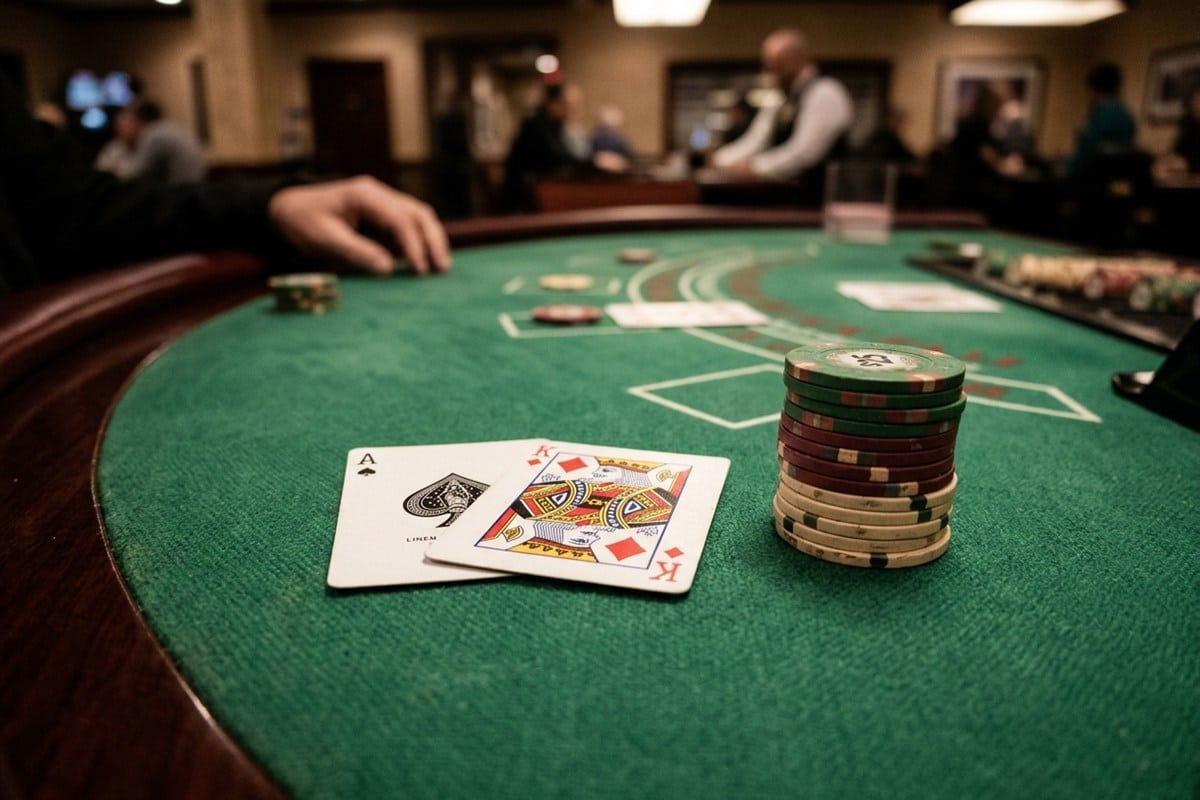
Mastering standard blackjack rules gives cardroom players a clear understanding of how one of the world’s most iconic casino table games operates from the initial deal to final settlement. In fact, blackjack (historically known as Twenty-One) stands apart from purely random table games because player choices directly alter mathematical expected value on every round. Consequently, learning how to play blackjack accurately begins with grasping card values, mandatory dealer procedures, and common table terminology.
Furthermore, knowing exact house rules protects players from costly misunderstandings at live or digital tables. Therefore, this comprehensive Pillar guide explores blackjack rules, covering the core objective of the game, explaining card values and scoring, detailing mandatory dealer actions, examining win-loss settlement outcomes, and clarifying essential terminology.
Core Objective of Blackjack
To begin with, the primary objective under blackjack rules is straightforward: beat the dealer’s final hand total without exceeding 21. Specifically, players do not compete against other seated participants at the table. Instead, every seated player faces the house dealer independently, even though everyone shares the same table and draws from the same shoe.
Why Beating the Dealer Matters More Than Reaching 21
First, novice players often assume they must reach 21 on every round to win. However, you can win comfortably with a modest total such as 17, 18, or even 13 whenever the dealer’s hand busts (exceeds 21) or finishes lower than yours. Conversely, any player hand that exceeds 21 loses immediately—regardless of whether the dealer subsequently busts on the same round. Therefore, managing bust risk forms the central tactical pillar of sound table play.
Natural Blackjack vs Standard 21
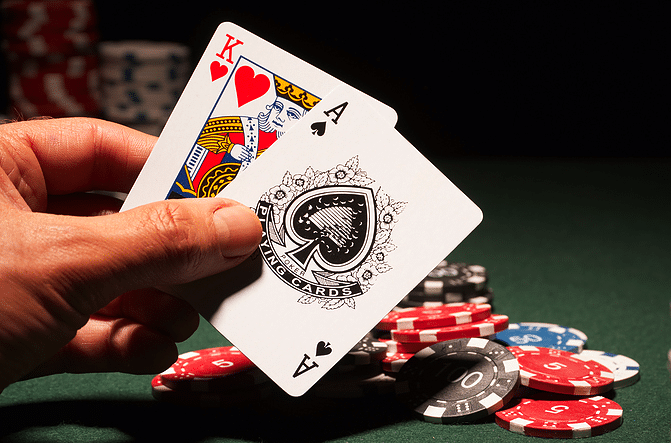
Meanwhile, an opening two-card hand consisting of an Ace and any 10-value card (10, Jack, Queen, or King) forms a Natural Blackjack. Notably, a Natural Blackjack outranks a multi-card 21 (such as 7-7-7 or 9-5-7) and typically pays 3:2 on traditional tables (for example, 150 units profit on a 100-unit stake). However, some recreational tables reduce this payout to 6:5, which substantially increases the house edge. Thus, inspecting table felt markings before sitting down remains vital.

Dealing Flow and Blackjack Card Values
Moreover, understanding card values ensures you calculate both your own total and the dealer’s visible strength effortlessly. Specifically, standard blackjack uses 1 to 8 standard 52-card decks shuffled together, while card suits (spades, hearts, diamonds, clubs) hold zero effect on hand rank.
Number Cards, Face Cards, and Flexible Aces
First, every card carries a fixed numerical point value:
- Cards 2 through 10: Count strictly at their printed face value (for example, a 7 counts as 7 points).
- Jacks, Queens, and Kings (Face Cards): Each counts as 10 points.
- Aces: Count dynamically as either 1 point or 11 points, depending on whichever value produces the stronger legal hand without busting.
Consequently, a hand containing an Ace counted as 11 (such as Ace + 6, totalling 7 or 17) functions as a Soft Hand because drawing another card cannot immediately bust it. In contrast, a hand with no Ace, or where an Ace must count as 1 to stay at or under 21 (such as 10 + 6 + Ace = 17), functions as a Hard Hand.
Core Player Actions – Hit, Stand, Double Down, and Split
After receiving two face-up cards alongside the dealer’s one face-up card (upcard) and one face-down card (hole card), each player chooses one of four core actions:
- Hit: Request an additional card from the dealer to raise your point total.
- Stand: Decline further cards and lock in your current point total.
- Double Down: Double your initial wager in exchange for receiving exactly one more card.
- Split: Separate two initial cards of equal rank (such as 8-8) into two independent hands by placing a matching second wager.
Additionally, selected casinos permit Surrender, allowing you to forfeit half your stake immediately against a dominant dealer upcard.

Mandatory Dealer Actions and Table Protocol
Subsequently, once every seated player completes their decisions or busts, the dealer reveals the hidden hole card and executes strictly automated blackjack rules. Unlike players, the dealer holds zero personal discretion and cannot choose to hit or stand based on intuition.
Hard 17 vs Soft 17 House Rules (S17 vs H17)
Specifically, every licensed casino enforces a predetermined threshold printed directly on the table felt:
- Totals of 16 or Less: The dealer must hit and draw cards until reaching at least 17.
- Stand on All 17s (S17): The dealer must stand on both Hard 17 and Soft 17 (Ace + 6).
- Hit on Soft 17 (H17): The dealer must hit on Soft 17 in an attempt to build a stronger total, slightly raising the house advantage by roughly 0.2%.
Therefore, S17 tables offer measurably more favourable odds for disciplined players than H17 tables.
Dealer Blackjack Checks and Insurance Side Bets
Furthermore, when the dealer displays an Ace or 10-value upcard, modern American-style shoe games include an automatic peek for Natural Blackjack before players draw cards. If the dealer shows an Ace, the table opens an optional Insurance side bet paying 2:1 that the dealer holds a 10-value hole card. However, mathematical analysis shows Insurance carries a high house edge (roughly 7.4% in multi-deck games), so basic strategy specialists consistently decline it.
Win, Loss, and Push Settlement Outcomes
In addition, knowing how casinos settle completed rounds eliminates ambiguity when chips move across the felt. Specifically, every surviving player hand resolves against the dealer’s final score through one of three distinct outcomes.
Standard Payouts, Busts, and Push Ties
First, if your total beats the dealer’s standing total—or if the dealer exceeds 21 while you remain at 21 or under—you win 1:1 (even money) on standard victories, or 3:2 on an uncontested Natural Blackjack. Second, if your hand exceeds 21, or finishes below a valid dealer total, the house collects your stake. Third, if both you and the dealer finish with the exact same legal total (for example, both hold 19 or both hold Natural Blackjack), the round settles as a Push, and your original stake remains untouched.
House Edge and Responsible Bankroll Discipline
Finally, even under optimal basic strategy, blackjack retains a small built-in mathematical house edge—typically 0.5% on favourable 3:2 S17 tables. Consequently, short-term card variance causes unpredictable winning and losing swings over single sessions. Always treat casino guides as educational references, set strict session budgets, and play solely within licensed jurisdictions.
Frequently Asked Questions About Blackjack Rules
What is the main goal in standard blackjack rules?
The primary goal under blackjack rules is to finish with a higher hand total than the dealer without exceeding 21, or to win when the dealer busts over 21.
When must a blackjack dealer hit or stand?
Under standard rules, the dealer must hit on 16 or less and must stand on 17 or higher; check the table felt to see whether the house stands (S17) or hits (H17) on Soft 17.
What happens if both the player and dealer tie on the same total?
When both the player and dealer hold the exact same legal total of 21 or under, the round ends in a Push, and the casino returns the player’s stake in full.