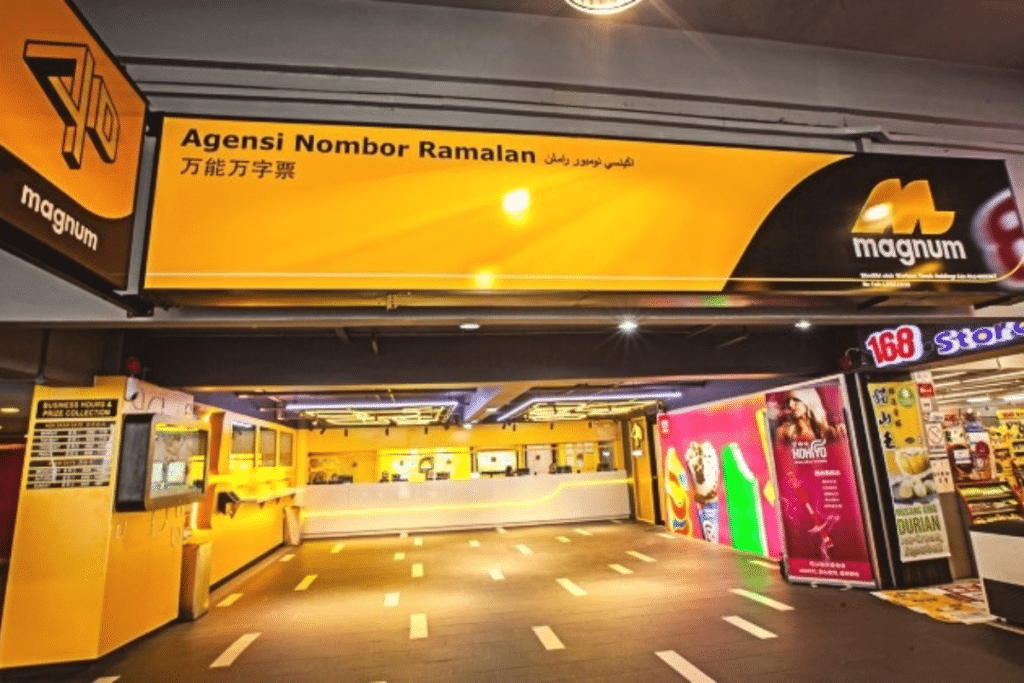
Magnum is the oldest of Malaysia’s licensed 4D brands. In some ways, it faces most directly the structural problem affecting the entire legal NFO sector. It has a brand generations of Malaysians recognise and a licence that confers legitimacy, but it carries a tax burden no illegal competitor carries. But it has no way to sell a ticket to someone who does not want to leave the house.
That is the compliance angle worth examining in detail. Magnum’s record is clean. Its tax contribution is substantial. And operators who pay nothing, comply with nothing, and operate 24 hours a day on a smartphone are eroding its market position.
The Licence and the Corporate Structure
Magnum Corporation Sdn Bhd operates under a number forecast operator licence issued through the Ministry of Finance’s Betting Control Unit, within the framework of the Pool Betting Act 1967 and the Lotteries Act 1952. The government permits it as one of three entities to conduct commercial number forecasting in Peninsular Malaysia. The Common Gaming Houses Act 1953 provides the enforcement backdrop, and authorities prosecute unlicensed 4D operations under it.
The brand is listed on Bursa Malaysia as Magnum Berhad. It is a pure-play NFO business. Unlike Sports Toto, it has no large luxury car retailing arm. Magnum’s revenue is essentially lottery revenue. That makes it a cleaner read on the legal NFO market’s health. It is also a more direct proxy for competitive pressure from the illegal sector.
The licence is tied to physical premises. Malaysia licenses this business by location, and the approvals held by the three NFOs cover their outlets in the peninsula — not apps, not websites, not online accounts. Magnum sells at counters. That is the whole distribution model.
The Games
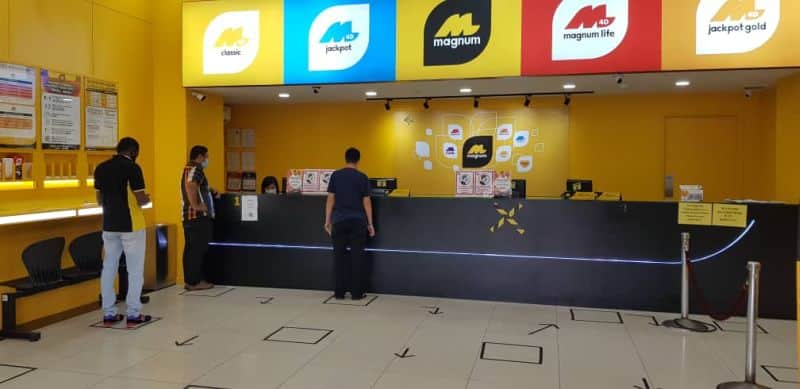
Magnum builds its product set around the 4D format, with several variants that add jackpot mechanics or different draw structures.
4D Classic is the core product: pick a four-digit number, choose a bet type, and match it against the drawn numbers. Prize categories typically run from first prize down through special and consolation tiers.
4D Jackpot pairs two four-digit numbers. Both must be drawn for the jackpot tier to pay, which produces larger but less frequent top prizes. It is the product that generates the headline wins — including a RM34.5 million Magnum 4D Jackpot 1 payout reported in June 2026.
4D Jackpot Gold is a further variant with its own draw mechanics and prize structure.
Magnum Life is a subscription-style game with a different format from the standard 4D draw.
The operator conducts draws three times a week. These are typically Wednesday, Saturday, and Sunday. It holds special draws on additional dates if the Ministry of Finance approves. The ministry has capped special draws at 22 per year. It has also required approved operators to limit them further in some periods. One example is the 2026 schedule, which has no special draws in November.
The Tax Record: 30.7 Sen Before Revenue
Magnum’s tax contribution is the clearest illustration of the structural disadvantage the legal NFO sector operates under.
On a RM2 ticket, the government takes approximately 30.7 sen before the operator records any revenue. That figure comprises an 8% gaming tax on gross sales and an 8% pool betting duty that applies to net sales after the operator deducts the gaming tax. Corporate income tax at 24% then applies to profits, and sales and service tax applies to gaming services.
The aggregate contribution is substantial. Sports Toto and Magnum together paid an estimated RM7 billion or more in direct and indirect taxes between 2021 and 2025, according to analysis published in Nanyang Siang Pau. That figure covers gaming tax, pool betting duty, corporate tax, and other indirect taxes across the two listed NFOs.
For Magnum specifically, revenue has hovered between roughly RM2.03 billion and RM2.7 billion in recent years. This excludes pandemic-affected periods, according to The Edge Malaysia’s analysis of the NFO sector. Revenue has been broadly flat over the period. Meanwhile, the market capitalisation of listed NFOs has declined over the past decade. Investors have priced in the structural threat from the illegal market.
That is the compliance story in financial form: a licensed operator paying a very high effective tax rate on a flat revenue base, competing against an untaxed shadow market.

The Compliance Record
Magnum has no publicly reported enforcement actions, licence suspensions, or regulatory fines against its NFO operation. It operates within the same federal licensing framework as Sports Toto and Da Ma Cai, subject to Ministry of Finance oversight of its gaming operations and media messaging.
On responsible gambling, Magnum has taken a more visible position than is typical for the sector. The company has partnered with the Malaysian Mental Health Association (MMHA). The partnership trains employees to identify problem gaming early. The company also works with the Gambling Rehab Centre to support rehabilitation. It has publicised player well-being initiatives in mainstream media. This is a reputational strategy. It positions the company as the responsible end of a category often discussed only in terms of harm.
That positioning matters commercially as well as ethically. In a market where the main competitor is illegal, the licensed operator’s only durable differentiator is legitimacy. A clean regulatory record and a visible responsible gambling programme are not marketing extras. They are the product.
The Real Competitor: An App It Cannot Build
Magnum’s most serious competitive threat is not Sports Toto and not Da Ma Cai. It is the illegal NFO market, estimated at roughly twice the size of the legal industry — around RM8 billion to RM9 billion annually against a legal market of similar scale.
Illegal operators offer what Magnum cannot. They offer daily draws, higher payouts funded by the absence of gaming tax, credit extensions, and 24/7 mobile access through websites and apps. The Star reported that illegal bookies run more than 50 websites and smartphone apps. This lets them bypass physical enforcement entirely.
The pandemic legacy compounds the structural disadvantage. During the movement control orders of 2020 and 2021, authorities closed legal outlets, and illegal operators captured the demand by going digital. Ticket sales per draw have not returned to pre-pandemic levels.
Magnum’s position matches the rest of the sector. It advocates for a level playing field. That means enforcement against illegal operators. It also means permission for legal operators to offer tele-betting or digital channels. That advocacy has not produced a policy change. In August 2026, the Ministry of Finance confirmed it has issued no new gambling licences or permits since the 1990s. It also confirmed the anti-online gambling bill now being drafted is an enforcement measure, not a licensing reform.

FAQ
Who operates Magnum 4D?
Magnum 4D is the brand of Magnum Corporation Sdn Bhd, listed on Bursa Malaysia as Magnum Berhad (KLSE: MAGNUM). It is one of three licensed number forecast operators in Peninsular Malaysia.
What games does Magnum 4D offer?
Magnum offers 4D Classic, 4D Jackpot, 4D Jackpot Gold, and Magnum Life. Draws are held on Wednesday, Saturday, and Sunday, with special draws on additional dates subject to Ministry of Finance approval.
How much tax does Magnum pay on a ticket?
On a RM2 ticket, the government takes approximately 30.7 sen before the operator records revenue. This comprises an 8% gaming tax on gross sales and an 8% pool betting duty on net sales, before corporate income tax and sales and service tax.
Can I buy Magnum 4D tickets online?
No. Magnum sells only through physical outlets in Peninsular Malaysia. There is no legal online or app-based sales channel. Online 4D betting through unlicensed platforms is illegal.
Is Magnum 4D legal?
Yes, when purchased from a licensed Magnum outlet. It is legal for non-Muslims aged 21 and above. Muslims are prohibited from all gambling under state Syariah law.
What is Magnum’s biggest competitive threat?
The illegal NFO market, estimated at roughly twice the size of the legal industry at RM8–9 billion annually. Illegal operators offer daily draws, higher payouts, credit, and 24/7 mobile access, none of which licensed operators are permitted to match.
Sources
- The Edge Malaysia — “Muted growth potential overshadows NFOs’ attractive dividend yield,” 27 April 2026. NFO revenue range, market capitalisation decline, and illegal market size.
- Nanyang Siang Pau (e南洋) — “还没开奖政府先赢 博彩双雄5年缴税逾70亿,” 5 June 2026. Combined NFO tax contribution and per-ticket tax breakdown.
- The Star — “Magnum advances player well-being initiatives,” 21 May 2026. MMHA training partnership and Gambling Rehab Centre collaboration.
- The Star — “Illegal bookies run over 50 websites and apps,” 2023. Illegal NFO digital distribution.
- Negaraku.md — “Gaming, Casino and Betting Duties in Malaysia,” 7 August 2026. NFO tax structure, special draw caps, and licence framework.
- Ministry of Finance Malaysia — Statement on gambling licences, 27 August 2026, confirming no new licences since the 1990s.
- Common Gaming Houses Act 1953 (Act 289) / Pool Betting Act 1967 / Lotteries Act 1952 — Attorney General’s Chambers, Laws of Malaysia.
- China Press / e南洋 — 2026 Magnum 4D Jackpot payout reports.