Malaysia has spent decades building a legal gambling framework. It licenses three number forecast operators, one casino, and a handful of turf clubs; taxes them heavily; and regulates their advertising, premises, and operations. And then it watches as an illegal market — larger, faster, and untaxed — grows alongside it.
The numbers tell the story with brutal clarity. The legal NFO market generates around RM8 billion to RM9 billion a year. The illegal gambling market generates at least RM18 billion. The legal market pays billions in gaming tax, pool betting duty, and corporate tax. The illegal market pays nothing. The government loses approximately RM5 billion a year in tax revenue to syndicates and bookies.
This is the annual deep-dive into Malaysia’s illegal gambling economy — its size, its structure, its enforcement record, and the policy dilemma it creates.
The Size of the Shadow Market: RM18 Billion
The most widely cited figure for Malaysia’s illegal gambling economy is RM18 billion in annual revenue. That estimate, reported by Wong Chun Wai and others, covers illegal 4D betting and gambling syndicates.
That figure is roughly twice the size of the legal NFO market. PublicInvest has estimated the legal gaming market at around RM9 billion a year, and the illegal market at two to three times that size. Other estimates put the illegal market at 1.5 to 2 times the legal market, with annual lost tax revenue of around RM3 billion. The RM5 billion figure for lost tax revenue is cited separately by Wong Chun Wai and other commentators.
The range of estimates reflects the difficulty of measuring an activity that is, by definition, unrecorded. But the directional conclusion is consistent across sources: the illegal market is larger than the legal one, and it is growing.

The Structure of the Illegal Market
The illegal gambling economy is not a single monolith. It operates across several distinct segments, each with its own infrastructure and customer base.
The first is illegal 4D betting. This is the direct competitor to the licensed NFOs. Illegal operators offer daily draws, higher payouts, and credit extensions. They operate through networks of runners, physical collection points, and increasingly through mobile apps and websites. The Star reported in 2023 that illegal bookies run more than 50 websites and smartphone apps, allowing them to bypass physical law enforcement and operate 24/7.
The second is online casino and sports betting. These are offshore platforms, licensed in jurisdictions like Curacao, Malta, or the Philippines, that accept Malaysian players. They offer casino games, live dealer tables, and sports betting markets. They are not licensed in Malaysia, but they are accessible through mobile browsers and apps, often with ringgit pricing and local language support.
The third is underground casinos and gambling dens. These are physical operations — shophouses, apartments, back rooms — that run card games, mahjong, and other table games. They are the traditional target of police raids, and they remain a significant part of the market, particularly for older gamblers and high-stakes players who prefer cash transactions.
The fourth is the payment and money-laundering layer. This includes e-wallets used to layer funds, mule accounts that receive and transfer gambling proceeds, and crypto rails that move money across borders. The enforcement record shows that this layer is increasingly the focus of investigations, because it is the point where the illegal market touches the formal financial system.
Why the Illegal Market Wins
The illegal market does not win because it offers a better product. It wins because the legal market is structurally constrained in ways that the illegal market is not.
Legal NFOs cannot sell online. Sports Toto, Magnum, and Da Ma Cai sell only through physical outlets. They cannot offer mobile betting, app-based purchases, or online account top-ups. The illegal market offers all of these. A player who wants to place a bet at 11pm without leaving the house has no legal NFO option.
Legal NFOs are limited in draw frequency. The legal operators conduct three draws a week, with special draws subject to Ministry of Finance approval. Illegal operators can run daily draws, and some run multiple draws per day.
Legal operators pay heavy taxes; illegal operators pay nothing. On a RM2 ticket, the government takes about 30.7 sen before the operator records revenue. The illegal operator pays no gaming tax, no pool betting duty, and no corporate tax. That cost advantage is passed on to players in the form of higher payouts and credit extensions.
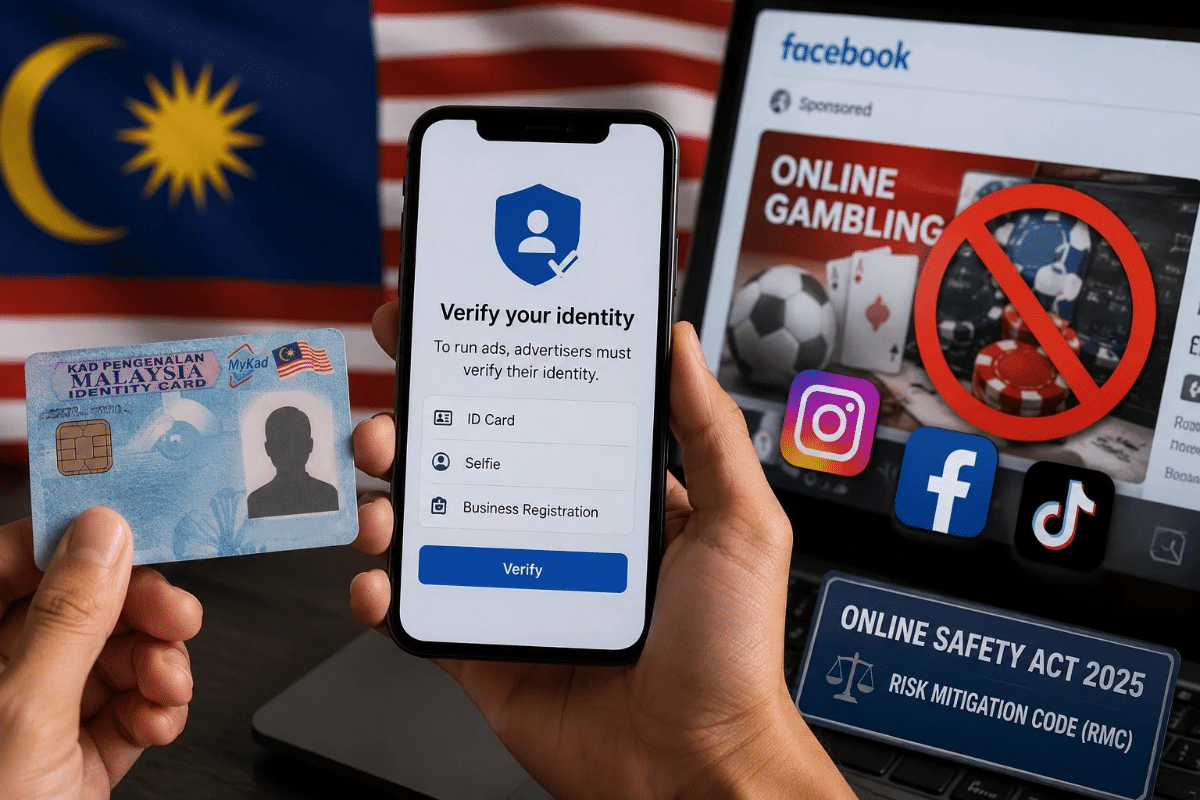
Legal operators face advertising restrictions; illegal operators advertise freely on social media. MCMC has removed hundreds of thousands of pieces of online gambling content, but the volume of new content generated by the illegal market exceeds the takedown pipeline. The illegal operator can market on Facebook, TikTok, and messaging apps with relative impunity, while the legal operator is constrained by Ministry of Finance oversight.
The result is a market where the legal product is safer, more transparent, and more heavily regulated — and structurally less convenient than the illegal alternative.

The Enforcement Record: Thousands of Arrests, No Deterrent
Malaysia does not lack enforcement. It lacks enforcement that changes the economics of the illegal market.
In 2026, the Royal Malaysia Police conducted hundreds of operations against illegal gambling. During the FIFA World Cup, 422 raids led to 554 arrests, including 341 Malaysians and 213 foreign nationals. Authorities seized RM167,062 in cash and detected RM3.249 million in illegal wagers.
In Kuala Lumpur alone, 868 raids between January 1 and June 23 led to 1,156 arrests. Police seized RM45,033 in cash and detected betting transactions amounting to RM96,878.58 and HK$32,799.75.
In October, police raided nine online gambling call centres in a two-day operation, arresting 46 foreign nationals and seizing 24 laptops, 71 mobile phones, 10 WiFi modems, and RM23,000 in cash.
Prime Minister Anwar Ibrahim said in February 2026 that enforcement actions had resulted in seizures amounting to billions of ringgit, and he vowed to continue escalating the crackdown.
But the arrests and seizures have not shrunk the market. The illegal economy is still estimated at RM18 billion. The enforcement model — raid, arrest, seize, prosecute — disrupts individual operations but does not change the underlying incentives. As long as the illegal market can offer a more convenient product at a lower tax cost, demand will migrate back to it.
The Policy Dilemma: Prohibition vs. Channelisation
The illegal gambling economy presents Malaysian policymakers with a dilemma that has no easy resolution.
The prohibitionist approach — criminalise all unlicensed gambling, enforce aggressively, and restrict legal operators to physical premises — has not eliminated the illegal market. It has pushed it online, where enforcement is harder, and it has left the legal market unable to compete on convenience.
The channelisation approach — license online operators, tax them, regulate them, and use the tax revenue to fund enforcement and public health — would bring the illegal market into the formal economy. But it would require Malaysia to license a category of gambling it has spent decades prohibiting. The political and religious opposition to such a move is substantial. In 2010, the government withdrew a sports betting licence after public protests. In 2026, the Ministry of Finance confirmed that no new gambling licences have been issued since the 1990s.
Authorities are already pursuing a third approach — stricter penalties for illegal operators and their financiers. Lawmakers are now drafting the anti-online gambling bill, which would broaden police powers to freeze accounts and seize assets. But the penalty for operating an illegal lottery is currently only RM5,000 to RM10,000, a cost that a profitable syndicate easily absorbs.
The policy question is not whether to enforce. It is whether enforcement alone can shrink a market that is larger than the legal one. The evidence from 2026 suggests it cannot.

FAQ
How big is Malaysia’s illegal gambling economy?
The illegal gambling economy is estimated at RM18 billion in annual revenue, according to reports cited by Wong Chun Wai and others. That is roughly twice the size of the legal NFO market, which generates around RM8–9 billion a year.
How much tax revenue does Malaysia lose to illegal gambling?
The government loses approximately RM5 billion annually in tax revenue to illegal gambling syndicates and bookies. Illegal operators pay no gaming tax, pool betting duty, or corporate tax.
Why is the illegal market larger than the legal market?
The legal market is constrained by the prohibition on online sales, limited draw frequency, and heavy taxation. The illegal market offers 24/7 mobile access, daily draws, higher payouts, and credit extensions, and it pays no tax.
How many arrests were made for illegal gambling in 2026?
During the FIFA World Cup 2026, police conducted 422 raids and arrested 554 suspects. In Kuala Lumpur alone, 868 raids between January 1 and June 23 led to 1,156 arrests. Hundreds of additional arrests were made in other operations throughout the year.
What is the penalty for operating an illegal lottery in Malaysia?
Under current law, the penalty for operating an illegal lottery is relatively low — around RM5,000 to RM10,000 — which a profitable syndicate easily absorbs. The anti-online gambling bill being drafted would broaden police powers to freeze accounts and seize assets.
Has Malaysia considered legalising online gambling to capture the tax revenue?
Parliament and economists have proposed the idea, but lawmakers have never legislated it. In 2010, the government awarded a sports betting licence and then withdrew it after public protests. In 2026, the Ministry of Finance confirmed that it has not issued any new gambling licences since the 1990s.
Sources
- Wong Chun Wai — “When legal betting loses, illegal betting wins,” 22 August 2026. RM18 billion illegal market estimate, RM5 billion lost tax revenue, and structural comparison with legal NFOs.
- New Straits Times / PublicInvest — “Sports Toto ticket sales seen easing in Q4 after jackpot-driven boost,” 21 May 2025. Illegal market at two to three times the legal market of RM9 billion.
- KLScreener / Nanyang Siang Pau — “还没开奖政府先赢 博彩双雄5年缴税逾70亿,” 5 June 2026. RM3 billion lost tax estimate and illegal market at 1.5–2 times legal.
- ECNS / China News — “Malaysia’s crackdown on illegal gambling: over 500 arrested during FIFA World Cup 2026,” 7 July 2026. World Cup enforcement data.
- Astro Awani — “Polis KL tahan 1,156 individu terlibat perjudian,” 24 June 2026. Kuala Lumpur arrest and seizure data.
- MKN — “Barah Judi Atas Talian di Kalangan Belia Membimbangkan,” 22 October 2026. Op Dadu Khas and enforcement statistics.
- The Star — “Police blitz on illegal gambling in KL sees 1,156 suspects nabbed since Jan 1,” 24 June 2026. KL enforcement data.